Access to justice is a fundamental right, yet for many Mauritians, financial constraints, lack of legal awareness, delays and complex procedures remain significant barriers.
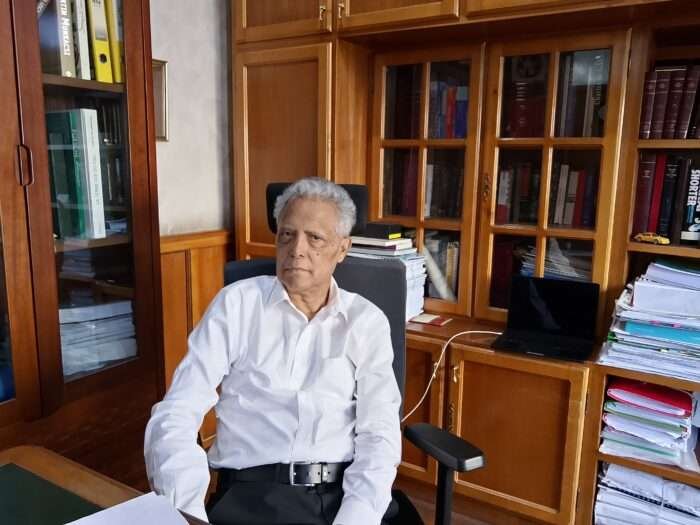
In this interview, the President of the Bar Council, Me Antoine Domingue, discusses these challenges and calls for a more accessible and responsive justice system. He advocates greater use of technology, simpler procedures, improved court management and a structured national pro bono system, while emphasizing the legal profession’s collective responsibility to ensure that financial means do not determine a person’s ability to defend their rights.
1-At the MBA Conference, you spoke about “Access to Justice – Bridging the Gap Between Law and Reality”. In your view, what is the biggest barrier preventing Mauritian citizens from effectively accessing justice?
First is lack of legal awareness. Many citizens do not know their rights or how to navigate the justice system. Secondly, financial constraints can make legal representation and pursuing a case difficult, leaving many without an effective voice.
Another major concern is delays in the judicial process, with cases sometimes taking years to conclude. Greater digitalisation of the courts could improve accessibility and efficiency.
Technology, including AI, could also help citizens better understand and access legal information, while the use of proper statistical data within the judicial system could help identify systemic problems and improve justice delivery.
Ultimately, bridging the gap requires better legal education, affordable access to legal assistance, faster and more digitalised courts, and better use of technology and data.
2-You called for more pro bono work for those who cannot afford legal representation. Should every lawyer have a formal pro bono obligation, rather than leaving it to individual goodwill?
I would not see pro bono work as a formal obligation, but rather as a collective responsibility of the legal profession, as also emphasized by the Attorney General at the MBA Conference. With the growing number of barristers, taking on pro bono cases should not be viewed as an undue burden on individual lawyers.
Other jurisdictions, including the UK, have mechanisms allowing lawyers to act on a success-fee basis, particularly in claims involving damages. Where permitted, such arrangements can help those who cannot afford legal fees while allowing lawyers to be compensated if the case succeeds.
Together, pro bono work and practical fee arrangements can help bridge the gap between financial means and access to justice.
3-What options are available to someone who cannot afford a private lawyer but does not qualify for legal aid? Is there a gap in the present system?
If a person cannot afford a private lawyer but does not qualify for legal aid, there is clearly a gap in the present system. Their main alternatives are pro bono assistance or a success-fee arrangement, where appropriate.
If none of these options are available, a person may have to represent themselves in court, provided they are able and willing to do so. This highlights the need to strengthen pro bono and other affordable legal assistance mechanisms for those who fall outside the legal aid system.
4-What protection does a client have if, despite paying substantial legal fees, they feel inadequately represented or neglected but fear complaining may jeopardize their case? How can they seek redress without risking their case or money?
The primary recourse for a client who feels neglected or inadequately represented is the Law Practitioners Disciplinary Committee (LPDC). Legal representatives have a professional duty to communicate with clients and keep them informed about their cases, as required by the Code of Conduct.
Unfortunately, we receive complaints about lawyers failing to respond to clients in a timely manner, despite modern communication tools such as email and WhatsApp making communication easier.
A dissatisfied client has the right to lodge a complaint with the LPDC and, where appropriate, seek a refund of fees if the services paid for were not properly rendered. Clients should not feel that they must simply accept poor communication or pay additional fees because their lawyer has failed to fulfil their responsibilities.
5-Can a legal representative require full payment upfront? More importantly, what protection is available to a client who cannot afford the full amount and subsequently feels intimidated, pressured or disadvantaged by their legal representative because of their financial situation? What rights and remedies are available to such a client?
If a client cannot afford the full legal fee upfront, they should discuss their financial situation with the lawyer and agree on a suitable payment arrangement, such as installments.
Importantly, fee arrangements should be discussed and agreed well in advance of any hearing, filing deadline or critical stage of the case. Clients should have sufficient time to understand and consider the terms. Payment arrangements should not be imposed at the last minute, when the urgency of the case may leave the client feeling they have no real choice.
Clients should receive clear, written and affordable terms, which should be respected by both parties.
If a client feels pressured or unfairly disadvantaged because of their financial situation, they should first seek to resolve the matter with the lawyer. If this fails, they may seek assistance from the Law Practitioners Disciplinary Committee (LPDC) or explore legal aid where available.
Ultimately, clients are entitled to fair, transparent and ethical treatment regarding legal fees.
6-Should there be clearer guidelines or indicative fee structures for different types of cases to prevent overcharging and ensure clients are not pressured into accepting fees they cannot reasonably afford?
The Law and Code of Conduct already require legal fees to be reasonable. If a client believes they have been overcharged, they can lodge a complaint with the Law Practitioners Disciplinary Committee (LPDC) and seek a review or refund where appropriate.
Legal services must remain grounded in professional ethics and lawyers should not take advantage of a client’s vulnerability or desperation to demand excessive fees.
Clearer guidelines or indicative fee structures for different types of cases could also improve transparency and help prevent overcharging. The LPDC already receives complaints regarding excessive fees and addresses them accordingly.
7-Can justice truly be considered accessible if the ability to effectively defend one’s rights still depends largely on the ability to afford legal representation?
Access to justice should be universal and not determined by financial means. The main avenues are legal aid, success-fee arrangements and pro bono work.
In some countries, associations dedicated to defending fundamental rights also take on meritorious cases pro bono or at reduced costs, based on the merits of each case. Such initiatives can provide vital support to those who cannot afford legal representation.
I also believe in providing initial free legal advice, allowing clients to understand their rights, options and possible next steps without an immediate financial burden.
Such initiatives, together with legal aid and pro bono services, can help reduce financial barriers and make justice more accessible.
8-Beyond pro bono work, what three urgent reforms are needed to make justice genuinely accessible to ordinary and vulnerable citizens in Mauritius?
I believe three key reforms are urgently needed to make justice more accessible in Mauritius:
1. Digitalization and use of technology: Court procedures should be available online, allowing citizens to file cases, track progress and receive updates electronically. AI and other technology could also help simplify processes, reduce delays and improve transparency.
2. Better court management and case assignment: In the Supreme Court, cases should ideally be assigned to judges at the time of lodgment rather than only at the trial stage. This could improve case management, accountability and reduce delays.
3. Simplification of legal procedures: Procedures should be made easier for ordinary citizens to understand and navigate, with clear online guides, accessible forms and legal assistance centres, particularly for vulnerable persons.
9-The Bar Council has an important role to play in this matter. Are you prepared to advocate for a structured national pro bono system — possibly involving the Bar, government and NGOs — to connect vulnerable citizens with lawyers willing to represent them?
Absolutely. I believe establishing a structured national pro bono system is both achievable and essential. We should engage Bar Council members to gauge their willingness to participate. Many experienced lawyers, especially senior counsel, have the capacity to assist those with meritorious cases who cannot afford legal representation.
Facilitating access to justice for vulnerable individuals is our duty. By fostering collaboration between the Bar, government, and NGOs, we can develop a strong system that connects deserving citizens with legal help. With political will and professional commitment, I am confident we can make significant progress.
10-What is your message to Mauritians who have suffered an injustice but have given up seeking justice because they believe they cannot afford it?
My message is simple: do not give up on seeking justice simply because you cannot afford it. There are legal avenues and support systems available, and the Bar has an important role in ensuring access to justice regardless of financial means.
Those facing injustice should seek assistance from lawyers willing to provide meaningful help, particularly in meritorious cases. The Bar Council and the legal profession must also be prepared to assist vulnerable persons and take on difficult or unpopular causes.
At the same time, individuals must take the first step by seeking advice and asserting their rights. No one should be denied the opportunity to seek justice simply because they lack financial resources.
RUQAYAH B. KHAYRATTEE